
How to Install a Borehole Pump
-
 Kevin Warner
- Technical Resources
- Apr 13, 2026
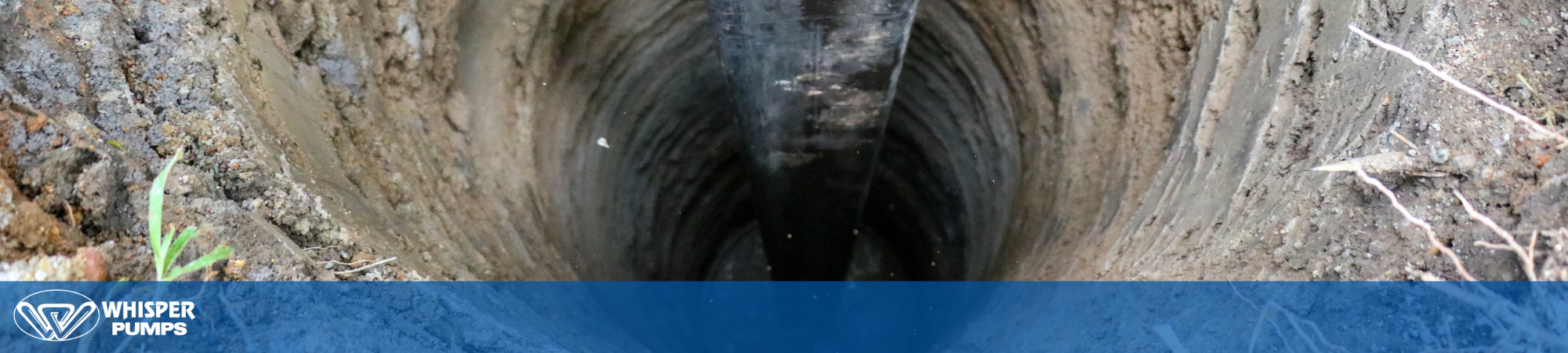
You’ve had your borehole drilled and you’re ready to turn it into a reliable private water supply. That puts you on the right track to reducing your water bills, with the added benefit of direct access to your own natural water source. The next step is choosing and installing the right borehole pump system, ensuring you can efficiently extract, manage, and make the most of this valuable resource for your home, farm, or business.
Choosing the Correct Borehole Pump Equipment
Selecting the right borehole pump involves several important factors, including:
• Borehole depth
• Required flow rate and water demand (domestic, agricultural or commercial use)
• Available power supply (single or three phase)
Water demand plays a key role, as a farm will typically require a much higher flow rate than a domestic household. With so many variables to consider, specifying the correct system can quickly become complex. That’s where the team at Whisper Pumps can help, offering expert guidance to ensure you choose the most suitable setup. We can also advise on the benefits of variable speed controllers, which provide consistent, reliable pressure compared to traditional on/off systems.
Assembling and Preparing Your Borehole Pump
Once all your equipment has arrived boxed from Whisper Pumps, you can begin assembling the system. This usually starts with connecting the motor to the pump, ensuring it is fitted securely in line with the manufacturer’s instructions. Most modern borehole water pumps are supplied in two main sections, the pump end and the motor so careful alignment and tightening are essential for reliable operation. Any pipe fittings provided should also be screwed and connected at this stage.
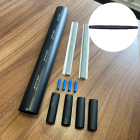
Next, the pump cable should be attached using a cable joint kit. If you have ordered your equipment from us, this may already have been pre-fitted (if you opted for this service). The cable joint provides a secure, watertight connection.
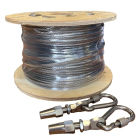
We also recommend using a borehole pump suspension kit, as this plays an important role in safe installation and retrieval. It acts as a backup safety measure in the event of cable or pipe failure, helping to protect your equipment.
Before lowering the pump into the borehole, always check that the motor is installed correctly and rotating in the right direction. The motor should spin anti-clockwise.
Taking the time to assemble your borehole pump carefully will help prevent issues during installation and ensure smooth, efficient operation once the system is in place.
Lowering and Installing Your Borehole Pump
Once your borehole pump has been fully assembled, the next step is to carefully lower it into the borehole. Before doing so, ensure the borehole is clear of any obstructions.
When installing the borehole pump:
• Lower the pump slowly and steadily using our borehole suspension kit
• Support the full weight of the system at all times
• Avoid dropping or twisting the pump
• Protect the cable and pipework from strain or damage
• Position the pump at the correct depth
Correct positioning is essential when installing a borehole water pump. The pump should typically be installed around a metre above the bottom of the borehole to prevent sediment from being drawn in, while still remaining fully submerged during operation. The exact installation depth will depend on your borehole conditions and required flow rate, which is why proper specification of borehole pumps is so important. If you have purchased your equipment from us, we can advise on the correct installation depth.
Careful installation will help protect your borehole water pump, improve overall performance, and extend the lifespan of your system.
Water Treatment and Filtration for Borehole Systems
In many cases, water treatment and filtration equipment may need to be installed as part of the system, depending on how the borehole water will be used. It’s important to have borehole water tested to determine its quality and ensure it is suitable for your intended application, whether domestic, agricultural, or commercial. We can provide water testing services and supply a full range of filtration and treatment solutions to help bring your water up to drinking water standard if required.
Final Setup and Ongoing Use
Once installed, the system can be connected to a pressure system, storage tank, or control panel depending on your setup. If using a variable speed controller, this will help maintain consistent pressure and improve overall efficiency, particularly where demand fluctuates. Traditional control systems will operate by turning the borehole pump on and off as needed to maintain supply.
After installation, it’s important to monitor the system during initial operation to ensure everything is functioning correctly, including checking for leaks, verifying pressure, and confirming stable performance. Regular maintenance and periodic water testing will help keep your borehole pump system operating safely and efficiently over time.
With the correct equipment, careful installation, and appropriate water treatment where needed, a borehole pump can provide a dependable and cost effective private water supply for many years.

Starting at £609.70 £731.64
Starting at £550.90 £661.08
Starting at £269.60 £323.52
Starting at £96.00 £115.20
Starting at £15.40 £18.48

Starting at £299.00 £358.80